2020年1月13日星期一

Maintenance regulations for CNC electrical systems

1. Strictly abide by the operating regulations and routine maintenance system

2. Open the doors of CNC cabinets and strong electrical cabinets as little as possible Oil mist and dust can easily cause the insulation resistance of components to decrease, and even cause damage to circuit boards or electrical components
(1) In the summer, in order to make the CNC system work overtime for a long time, it is necessary to open the door of the CNC cabinet to dissipate heat, which will eventually lead to the accelerated damage of the CNC system.
(2) The correct method is to reduce the external ambient temperature of the CNC system.
Note: Unless necessary adjustments and repairs are performed, the doors of CNC cabinets and high-voltage cabinets are not allowed to be opened at will.
(3) Some circuit boards and connectors that have been contaminated by external dust and oil mist can be sprayed with special electronic cleaners.
Note: The naturally dry liquid spray table forms an insulating layer on the non-contact surface to make it well insulated.

3. Regularly clean the cooling and ventilation system of the CNC cabinet
(1) Check whether the fan on the CNC cabinet works normally every day.
(2) Check the air duct filter for blockage every six months or quarter.
Note: The temperature in the CNC cabinet is too high (generally not allowed to exceed 55 ° C), causing an overheating alarm or the CNC system: the operation is unreliable.
(3) Cleaning method
1) Unscrew and remove the air filter;
2) While gently vibrating the filter, use compressed air to blow away the dust in the air filter from the inside out;
3) When the filter is too dirty, it can be washed with a neutral detergent (detergent and water formula is 5/95) (but not rubbed), and then placed in a cool place to dry.

4. Pay attention to the regular maintenance of the input / output devices of the CNC system (such as magnetic heads)

5. Frequently monitor the grid voltage of the CNC system (85% ~ 110%) check frequently

6. Periodically replace the battery for storage (lithium battery, nickel-chromium battery rechargeable)
(1) Regularly check the battery voltage and replace it once a year (in general, even if it has not expired, it should be replaced once a year to ensure that the system works properly).
(2) The battery replacement should be performed under the power supply of the CNC system, so as not to lose the parameters in the RAM.

7. Maintenance of CNC system when not in use for a long time
(1) Power on the CNC system often:
a. Check whether the battery voltage is too low and whether there is an alarm; if so, replace the backup battery in time.
b. Dry running and dehumidification to prevent moisture or short circuit of electrical components or printed boards: power on more than twice a week; power on every day in the rainy season
(2) For DC motors, take out the brushes to prevent corrosion of the commutator ensure commutation performance.

8. Maintenance of spare circuit boards
The spare circuit board is regularly installed on the CNC to be powered on to avoid damage.

9.Maintenance and maintenance of common relay and contactor control systems
Take measures to prevent strong electromagnetic interference from contactors and relays in the strong electrical cabinet.
The AC motor starts and stops frequently. The electromagnetic induction phenomenon causes the CNC system control circuit to generate noise such as spikes or surges, which interferes with the system's operation. For example, the RC network is connected in parallel at both ends of the AC contactor or the three-phase input end of the motor.
Prevent oxidation and poor contact of contactors and relay contacts.

10. Make preparations before repairs
Spring machine failure occurs Emergency stop, protect the site Prepare for maintenance (technical preparation \ tool preparation \ spare parts preparation)
Our company is dedicated to the sales and communication of springs and spring machines. If you have any intention, please contact us.
Name:Luoyang Xian Heng Spring Machinery Co., Ltd.
Email: marketing@springcoiling.com
Tel: 0086-379-62265677
Fax: 0086-379-67878852
Whatsapp: 0086-1833 8852 671
Wechat: 0086-1833 8852 671

2020年1月7日星期二

Simple Classification of Spring Materials

Spring materials can be roughly divided into the following categories:

Spring materials can be divided into two categories, metal and non-metal according to their materials. Metal elastic materials are widely used in mechanical engineering. Metal elastic materials are divided into several different types according to the main metal element composition of the material. Among them, spring steel is the spring material with the largest amount of use and the widest range of use. In spring steel, carbon spring steel and alloy spring steel both use iron as the main component. Alloy spring steel also appropriately adds alloy elements such as manganese, silicon, chromium, vanadium, tungsten, molybdenum, niobium, and boron to obtain Desired performance.


1.Carbon spring steel
Carbon spring steel and alloy spring steel are currently the most widely used spring materials, and both account for more than 90% of the amount of spring material used.
2.Alloy spring steel
According to the different alloy elements contained in steel, alloy spring steel can be divided into four series.
(1) Silicon-manganese alloy spring steel
The hardenability of silicon-manganese alloy spring steel is higher than that of carbon steel, and silicon can improve the strength and tempering stability of spring steel, so that it can be tempered at higher temperatures to obtain better comprehensive mechanical properties.
(2) Chrome vanadium alloy spring steel
Chromium vanadium alloy spring steel is a commonly used high quality spring steel, the typical grade is 50CrVA.
(3) Cr-Mn alloy spring steel
Chromium-manganese steel is not widely used in China. It is also an excellent alloy spring steel.
(4) Silicon chromium spring steel
In addition to 55Cr Si, the grades of silicon chromium spring steel and silicon chromium spring steel with vanadium are 65Si2CrA and 60Si2CrVA. Due to the action of chromium and vanadium in the steel, the steel has a low overheating sensitivity, is not prone to decarburization and graphitization, and has relatively stable mechanical properties at high temperatures and good hardenability.

3. Quenching and tempering spring steel wire

Our company is dedicated to the sales and communication of springs and spring machines. If you have any intention, please contact us.
Name:Luoyang Xian Heng Spring Machinery Co., Ltd.
Email: marketing@springcoiling.com
Tel: 0086-379-62265677
Fax: 0086-379-67878852
Whatsapp: 0086-1833 8852 671
Wechat: 0086-13526986923

2020年1月6日星期一

How Beautiful are They!!!


Springs are very common in our lives, but the more common things, the easier it is to be ignored. Therefore, these beautiful springs can only be appreciated by a small number of people. What do you think?

2020年1月4日星期六

MOLD SPRING, NOT AS HARD AS YOU THINK

With the development of die industry in recent years, the number and varieties of die spring especially steel wire die spring with profiled section, are increasing. The spring of special-shaped section mould has the characteristics of large rigidity, long life and small volume. But its design theory development is relatively slow. At present, in addition to the square section of the spring design method is relatively mature, the other section of the spring design method, basically according to the specific section through the test, find out the correction coefficient to obtain the specific section of the empirical design formula, is to this kind of spring characteristics and design problems to make a brief introduction.


This is a question of great concern to the user of the spring and must be clarified. A square cross section is compared with a circular cross section helical spring.

In the same space, the bearing capacity of square section steel spring is 43-48% higher than that of circular section spring. Obviously, the rectangular spring is more than 50%.

From the analysis of the main reason of spring failure, under the same condition, the service life of steel spring with special section is increased by 13-14% than that of steel spring with circular section.

Profiled section steel wire spring can produce large deformation.

The weight of profiled wire spring is large.

Linearity is better than the circular section spring, that is, stiffness tends to be constant. In particular, a spring with a long side wound parallel to the axis.

The application scope is restricted: from the analysis, it can be seen that if the special-shaped section material spring cannot fully use its advantages, it will not produce economic benefits.


(1) the design load cannot be achieved with circular section materials.

(2) replace circular section compound spring.

(3) when the spring of circular material cannot reach the required amount of deformation.

(4) where the spring installation space is small.

(5) where strict spring characteristics are required.

Second, the mold spring design principle

1. Spring material allowable stress (tau) choice, should be in place to ensure that the spring fatigue life is given priority to consider. The dynamic life of springs is generally divided into three categories:

Ⅰ class: carry alternating load number is 106;

Ⅱ classes: carry alternating load number is 103-105;

Ⅲ class: carry alternating load number less than 103;

2. Material ratio (a/b) should not be too large, and the spring winding should not be too small.

3. Design of rectangular profiled spring, be sure to derivation and draw in different ratio, different kind than the (tau) and the shear stress and deformation correction coefficient correction factor (beta) curve or formula.

4. According to the given and restricted conditions, the design method with simple calculation and reasonable parameter selection should be selected.


Our company is dedicated to the sales and communication of springs and spring machines. If you have any intention, please contact us.
Name:Luoyang Xian Heng Spring Machinery Co., Ltd.
Email: marketing@springcoiling.com
Tel: 0086-13526986923
Fax: 0086-379-67878852
Whatsapp: 0086-1833 8852 671
Wechat: 0086-1833 8852 671

2019年12月30日星期一

WHY DOES THE SPRING NEED STRESS RELIEF ANNEALING?

The spring stress is generated during the rolling spring process. The original straight steel wire is wound into a spring shape, so the spring will generate stress at each point, and the residual stress after heat treatment. For these stresses, heat treatment should be performed again. Remove the internal stress, otherwise the spring will break easily during work.
The coil spring rolled by the cold coil process generally uses a lead bath austempered cold drawn steel wire (carbon spring steel wire, piano wire) and oil quenched and tempered spring steel wire. Springs made from these steel wire cold rolls do not require quenching, but must be subjected to stress relief annealing. Stress relief annealing is often referred to simply as tempering, sometimes referred to as stress relief tempering or stress relief tempering.
The purpose of stress relief annealing is to:

1) Eliminate the internal stress of wire cold drawing and spring cold roll forming;

2) Stabilizing the size of the spring, the spring that has not been subjected to the stress relief annealing will have an increase in the outer diameter and dimensional instability during the subsequent processing and during use;

3) increase the tensile strength and elastic limit of the wire;

4) Use stress relief annealing to control the spring size. For example, the spring is sometimes placed on the fixture for stress relief annealing to adjust the height of the spring.


Our company is dedicated to the sales and communication of springs and spring machines. If you have any intention, please contact us.
Name:Luoyang Xian Heng Spring Machinery Co., Ltd.
Email: marketing@springcoiling.com
Tel: 0086-379-62265677
Fax: 0086-379-67878852
Whatsapp: 0086-1833 8852 671
Wechat: 0086-1833 8852 671

2019年12月27日星期五

A Brief Summary of Spring Surface Treatment

The corrosion of springs can be divided into chemical corrosion and electrochemical corrosion according to the type of reaction. They are all the result of changes in metal atoms or electron gains and losses on the surface of the spring. Spring anti-corrosion methods generally use a protective layer, which can be divided into: metal protective layer, chemical protective layer, non-metal protective layer, and temporary protective layer according to the nature of the protective layer. The first three methods are emphasized here.
 
Stainless steel springs and copper wire springs have a certain anti-corrosion ability, so they are generally not treated with anti-corrosion.
1.Metal protective layer of spring
There are many types of metal protective layers. In the case of springs, electroplated gold is generally used to obtain metal protective layers. The plating protection layer can not only protect from corrosion, but also improve the appearance of the spring. Some electroplated metals can also improve the working performance of springs, such as increasing surface hardness, increasing anti-wear, improving thermal stability, and preventing radiation corrosion. However, if it is purely for the corrosion of the spring, electroplated zinc layer and electroplated cadmium layer should be generally used.
 
2.Chemical protection layer of spring
A chemical reaction method is used to form a dense protective film on the surface of the spring to prevent the spring from corrosion. Oxidation treatment and phosphating treatment are usually used. Oxidation treatment and phosphating treatment have low cost and high production efficiency. Generally, spring manufacturers use oxidation treatment as anticorrosive treatment.
 
3.Non-metal protective layer of spring
The non-metallic protective layer is a dip or spray coating of an organic substance on the surface of the spring, such as paint, asphalt, plastic, etc. to protect the spring from corrosion.
The non-metallic protective layer has a thicker film layer, good chemical stability, and better mechanical anti-corrosion effect, but has lower hardness and is easy to be scratched and damaged, and at the same time the film layer has aging phenomenon.

Our company is dedicated to the sales and communication of springs and spring machines. If you have any intention, please contact us.
Name:Luoyang Xian Heng Spring Machinery Co., Ltd.
Email: marketing@springcoiling.com
Tel: 0086-379-62265677
Fax: 0086-379-67878852
Whatsapp: 0086-1833 8852 671
Wechat: 0086-1833 8852 671

Common Problems and Causes of Oil Quenched-tempered Spring Steel Wire

In our daily steel wire production, oil-quenched steel wires occupy a large part. Mastering the method of judging the quality of steel wires is very important for us to make a good spring.
The use of spring steel wire to judge the problem of oil quenching currently only stops on the surface of the wire and the entire shape. It is not easy to judge the deep interior. Today we will gradually analyze the surface and internal problems of the wire.

First, the surface quality defect
1. Surface crack: The linear cracks on the steel surface should generally be consistent with the forging or rolling direction.
Reasons for formation:Mainly because of wrinkles and thermal cracks during processing (forging, rolling, heat treatment and tempering) due to surface over-burning, decarburization, loosening, deformation and excessive internal stress, as well as high levels of sulfur and phosphorus impurities on the surface And cold cracks.
Surface cracks can be detected by visual inspection, pickling, magnetic particle inspection, color inspection and gold equivalent methods. When confirming cracks, we must pay attention to distinguish the cracks on the surface of the steel itself that are brittle and loose, and cracks that appear after slight bending, but the steel itself does not have cracks.
2. Heavy skin and folds: "Tongue" or "scaly" metal flakes adhered to the surface of the steel, forming overlaps on local surfaces with obvious folds.
Reason for formation: During the hot working process, due to burrs, depressions, inclusions, subcutaneous pores, and surface looseness on the billet, the metal rheologically changes during thermal deformation, and heavy skin and folds are formed on the surface.
3, Ear: The surface of the steel material extends along the rolling direction.
Reasons for formation: The gap between the rolling holes of the rolling mill is too large, which causes the surface of the steel to form protrusions along the pores.
4. Scratch: The surface of the steel is a linear or arc-shaped groove mark under the action of external force (the groove bottom can be seen). 

Second, internal defects
1. Segregation: In fact, it is a general term for the uneven distribution of chemical components in steel. On the acid leaching sample, when the segregation is an erodible substance or gas inclusions, it is dark and dark in color, irregular in shape, slightly concave, flat at the bottom, and there are many dense microporous spots. If it is a resist element, it is light in color, irregular in shape, and relatively smooth, slightly concave spots. According to the location and shape of segregation, they are generally classified into the following categories:
① Center segregation: dark and dark spots with irregular shapes appearing in the center.
② Ingot-type segregation: Dark-spotted spots concentrated on a closed band with different widths which have the cross-sectional shape of the original steel ingot (usually square), so ingot-type segregation is also called box segregation.
③Spotted segregation: The spots are generally large, showing darker, slightly concave shapes, oval or melon seeds. Generally distributed, called general point segregation: those distributed on the edge of the steel are called edge point segregation.
Reason for formation: Segregation is the aggregation of certain elements caused by selective crystallization and diffusion during the ingot casting and solidification process. Segregation is unavoidable under normal production conditions. 
2. Looseness: The pores in the steel are generally irregular polygons on low magnification samples, and the sharp pits at the bottom usually appear in the segregated spots. In severe cases, there is a tendency to become spongy. According to the situation of loose distribution, they are divided into two categories: central loose and general loose:
① Loose center: there are concentrated voids and dark spots in the center of the low magnification sample. There is a slight interlayer on the longitudinal fracture. Under the microscope, you can see that pearlite increases in the center looseness, indicating that the carbon content in the center looseness increases.
②Generally loose: The tissue is dense on the low magnification sample, showing scattered small pores and small black spots. The pores are mostly irregular polygons or graphics, which are distributed on the entire cross section except the edge part.
Central loosening generally occurs at the head and middle of the steel ingot. The difference from ordinary loosening is that it is distributed on the steel section and the central part instead of the entire section. Generally, the higher the carbon content of the steel, the more severe the center porosity.
Reason for formation: During the solidification process of the steel ingot, due to the solidification and contraction of the low-melting-point material in the intergranular part and the release of gas, voids were generated, and the welded pipe was not equipped during the hot processing.
In steel, slight segregation and higher levels of porosity are allowed.

3. Inclusions: Inclusions include metal inclusions and non-metallic inclusions.
①Metal inclusions: Mainly due to defects caused by metal bars, sheets, and blocks falling into the ingot mold or iron alloy blocks added at the end of the smelting process during the casting process, which are not melted, and the edges are mostly clear. The color is significantly different from the surrounding geometry.
② Non-metallic inclusions: During the pouring process, there is no time to float out of the slag or the furnace lining peeled into the molten steel and refractory materials on the inner wall of the pouring system. After peeling off, leaving small round holes.

4. Shrinkage: On the low magnification sample, the shrinkage hole is located in the center, and there are often segregation, inclusions, or dense places around it. Sometimes, you can see caves or cracks before corrosion. After the corrosion, the pores became dark and irregularly wrinkled.
Reason for formation: When the ingot is poured, the last solidified part (heart) of the molten steel cannot be filled after the solidification and shrinkage, and the macroscopic holes left behind are not filled. The shrinkage holes are mainly formed at the ingot head (cap end).

5. Bubbles: On the low magnification sample, there are cracks that are approximately perpendicular to the surface, and there is a slight oxidation and decarburization phenomenon nearby. Below the surface, there are called subcutaneous bubbles, and deeper subcutaneous bubbles are called pinholes.
Causes: Defects caused by the gas produced during the ingot casting process and the gas released.

6. Crack: On the low magnification sample, the axis position cracks along the intergranular, forming a spider web, and when severe, it cracks radially.
Reasons for formation: There are mainly two types. One is internal tearing of the ingot due to some reason during solidification and cooling, which fails to weld during forging and rolling; the other is internal cracking due to improper forging. .

7. White point: On the low magnification sample, there are short cracks, which are generally concentrated in the steel, and there is almost no surface layer with a thickness of 20-30mm. Because cracks are not easy to distinguish, a fracture test should be added to verify. White dots appear as coarse silvery white dots on the fracture.
Reason for formation: It is generally believed that the effect of hydrogen and tissue stress is the small cracks caused by the combination of local pressure and the internal stress generated by the steel when the hydrogen is released and concentrated in the loose micropores to generate huge pressure.
Third, the external size defects
1, dimensional difference: including the length, diameter, thickness, positive and negative tolerances, grinding depth, width and other dimensions of the steel does not meet the requirements of the order standard.
2. Curvature: The steel is not straight in the length and width directions. The curvature of different materials has different names. Profiles are expressed by curvature; plates and strips are expressed by sickle, wave, and flutter.
3. Twisting: The steel bar is twisted into a spiral in the axial direction.

Common defects of steel wire
1. Scratching: Generally, the quality of phosphating is poor during the drawing process, and the wire drawing die is damaged and scratches the surface of the wire.
2. Local cracking: Generally belongs to local non-metallic inclusions or localized hardened phase structure in raw wire rods, subsequent drawing is not conducive to extension.
3. Crack: Generally belongs to the inheritance of raw material wire rods or the compression ratio of fine gauge steel wire is too large, which causes the internal stress of the steel wire to be too large.
4. Bending: Generally belongs to artificial handling and hanging bending
5. Ellipse: caused by drawing die ellipse
6. Decarbonization: caused by serious oxidation during genetic or heat treatment of raw materials

Common problems in spring production
1. Winding fracture:
① Local defects
② The spring winding ratio is small, and the hardness of the wire is too large
③ The hardened structure appears locally, and the material has poor ductility, which is generally related to the local segregation of the material
2. There is a sound of winding: the surface of the steel wire is not sufficiently lubricated, the surface oxide film is uneven or the material hardness is high
3. The spring diameter is unstable and the height is different: the performance of the wire rod is not good, or the setting of the winding machine is abnormal.
4. The fatigue life cannot meet the requirements:
 There are pits, scratches, abrasions, cracks, micro-cracks (improper shot peening) on the surface of the material, non-metallic inclusions on the surface, folding, decarburization, or severe segregation
 Improper spring design, uneven ends, stress concentration should at a certain point during fatigue test .
③ coarse material structure
④ Insufficient shot peening on the surface.
⑤ Insufficient tempering after spring winding, stress is not completely removed
This product is strictly forbidden from contact with acid and is easy to be brittle hydrogen embrittlement.

Our company is dedicated to the sales and communication of springs and spring machines. If you have any intention, please contact us.
Name:Luoyang Xian Heng Spring Machinery Co., Ltd.
Email: marketing@springcoiling.com
Tel: 0086-379-62265677
Fax: 0086-379-67878852
Whatsapp: 0086-1833 8852 671
Wechat: 0086-1833 8852 671
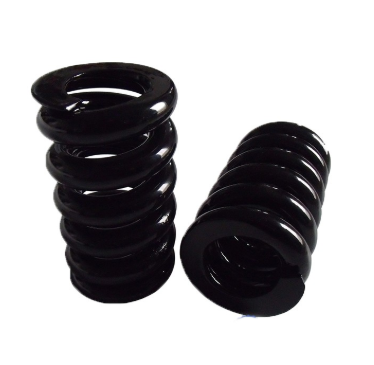
Main Factors Affecting Spring Fatigue Strength

1. Yield strength     There is a certain relationship between the material's yield strength and fatigue limit. Generally speaking, t...